


Sending someone unwanted sexual images, typically pictures of genitalia, without their consent, is known as cyberflashing. The recipient is intended to be shocked, embarrassed, or distressed by this behaviour. According to Scottish Law, cyberflashing was made a crime, punishable by up to two years in prison. By acknowledging the severe effects that this harmful online behaviour can have on victims, this law seeks to protect people from it. Because cyberflashing frequently entails the intent to obtain sexual gratification or cause emotional harm through digital means, it differs from other offences such as indecent exposure. Scotland is adjusting to new types of harassment in the digital age, as evidenced by the introduction of laws specifically targeting cyberflashing. Being aware of these legal changes promotes a safer online environment and helps victims understand their rights.
Defining Cyberflashing and Its Legal Status in the Scotland

This behaviour is recognised as harmful and is now subject to specific laws in the Scotland. The law targets unwanted exposure to explicit content and sets out penalties for offenders.
What is cyberflashing?
Sending someone explicit or nude photos without their permission is known as cyberflashing. Social media, messaging apps, and smartphones can all be involved. To shock or upset the recipient, the sender typically shares these pictures unexpectedly. This conduct is a type of sexual harassment that occurs online. Because it is a form of sexual abuse and an invasion of privacy, victims frequently feel violated. Consensual sharing and cyberflashing are different because the former requires neither consent nor permission.
Is Sending Unsolicited Pictures Illegal in Scotland?
Yes, it is against the law in Scotland to send unsolicited sexual images. Under new legislation, cyberflashing has been illegal since January 31, 2024. Prosecution may result from sending these photos without permission. England, Wales, and Scotland are all covered by the law; Scotland has had comparable regulations since 2010. Police investigate and may file charges against the sender after victims report cyberflashing. Depending on the circumstances, offenders may be subject to harsh penalties, such as fines and incarceration. The government’s intention to shield citizens from unwanted sexual contact is demonstrated by this legal response.
Relevant Cyberflashing Laws
The Online Safety Act 2023 contains the primary legislation about cyberflashing. It created new offences that were specifically directed at sending unwanted sexual images. Protections against online abuse are strengthened by this act. Additionally, cyberflashing was added as a criminal offence to Section 66A of the Sexual Offences Act 2003. The Crown Prosecution Service has explicit rules about how these cases ought to be handled. Cyberflashing carries a maximum sentence of two years in prison. The goal is to support victims through legal action, punish the harm caused, and discourage online sexual harassment.
Key Legal Frameworks and Notable Cases
Cyberflashing is covered by a variety of laws in Scotland that target both online and physical offences. These include current indecent exposure laws, more recent cybercrime laws, and particular cases that demonstrate the application of the law.
Indecent Exposure Law in Scotland
In Scotland, the Sexual Offences (Scotland) Act 2009 largely governs indecent exposure. The deliberate display of genitalia with the intent to cause alarm or distress is criminalised. Physical acts in both public and private areas are covered by this law. However, it is unclear whether laws against indecent exposure apply to online situations like cyberflashing. Sending unsolicited explicit images electronically is known as “cyberflashing”, which presents difficulties because it isn’t always considered indecent exposure. Because traditional exposure laws do not fully address online behaviours, victims of cyberflashing frequently find themselves in a grey area.
Cyber Crime Legislation
The Criminal Justice (Scotland) Act 2016 and the Communications Act 2003 are two Scottish laws that address cybercrime and target offensive or dangerous electronic communications. Cyberflashing cases have been prosecuted under these laws. Aiming to address online harms more directly, the Online Safety Act was recently introduced. It improves user protections and mandates that platforms refrain from sending unsolicited sexual images. Despite developments, authorities still use more general cybercrime laws to combat cyberflashing because there isn’t a specific crime for it yet.
Examples of Cyberflashing
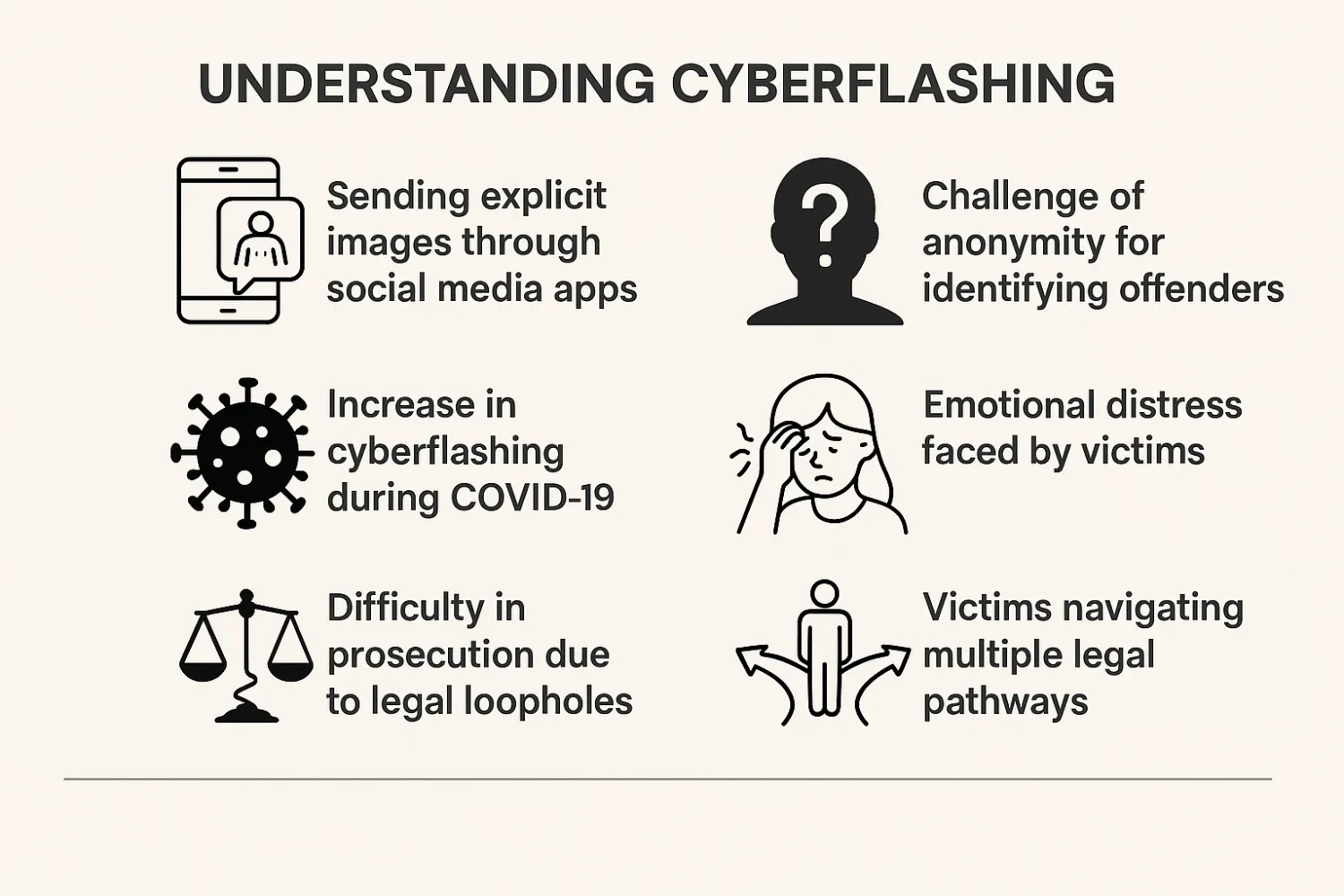
1. Explicit Images Are Used in Cyberflashing: Criminals frequently use social media apps like Facebook Messenger and Instagram to send explicit images. Example: Using Instagram’s direct message feature, someone may send someone unsolicited explicit images. 2. A Rise in Anonymity Finding Perpetrators Can Be Difficult: Since many incidents involve anonymous accounts, it is more difficult to identify the perpetrators. For instance, to send explicit photos without disclosing who they are, a user might set up a phoney Instagram account using a pseudonym. 3. Cyberflashing Increased During COVID-19: During the COVID-19 pandemic, reports of cyberflashing rose by about 27%, suggesting an increase in online harassment. Example: Cyberflashing incidents increased in tandem with the number of people using online platforms during lockdowns. 4. Victims Feel Distressed Emotionally: Victims report experiencing distress that is comparable to that brought on by physical exposure to indecent content. Example: When a victim receives an unsolicited explicit image, they may feel violated, humiliated, or distressed. 5. Legal Ambiguity Makes Prosecution Difficult: The lack of a specific legal definition for cyberflashing as a distinct offence makes prosecution more difficult. For instance, because there isn’t a clear law that specifically addresses cyberflashing, a victim may find it difficult to pursue legal action. 6. Managing Different Legal Routes: In order to obtain justice, victims frequently have to take several legal paths. Example: Since there is no specific “cyberflashing” law, the victim may need to report the incident as harassment or indecent exposure.
Frequently Asked Questions
How does the new Online Safety Act affect cyberflashing legally?
Sending unwanted sexual images is illegal under the Online Safety Act of 2023. Criminals may be subject to fines, restraining orders, and even jail time. Online platforms are also required by law to prevent and address instances of cyberflashing.
How are incidents of cyberflashing handled by Scottish law?
Cyberflashing is treated as a harassment and communications offence in Scotland. Though it emphasises harassment laws to cover severe or recurring digital abuses, the new guidance is in line with Scotland-wide efforts. Victims are urged by Police Scotland to report such incidents as soon as possible.
What, according to Scottish law, is cyberflashing?
Cyberflashing is the deliberate sending of pornographic images or videos without permission with the goal of frightening or degrading the recipient. Since it takes place online rather than offline, it differs from indecent exposure.
How does someone in Scotland report a case of cyberflashing?
Evidence, such as messages or screenshots, should be saved by victims. They can use online safety platforms or the police to report the incident. Additionally, social media companies must promptly address complaints and take down offensive content.
What are the consequences of reporting unsolicited, explicit images as cyberflashing?
Indeed, the legal definition of cyberflashing includes unsolicited explicit images. Penalties include criminal charges that result in jail time, fines, or restraining orders. The facts of the case and the offender’s intentions determine the severity.
What rules does the Crown Prosecution Service have in place for cases involving cyberflashing?
Prosecutors are advised by CPS to take into account the intention to cause distress or to seek sexual gratification. To determine charges, they consider the victim’s impact and the quality of the evidence. New laws of online safety and harassment take cyberflashing very seriously.
